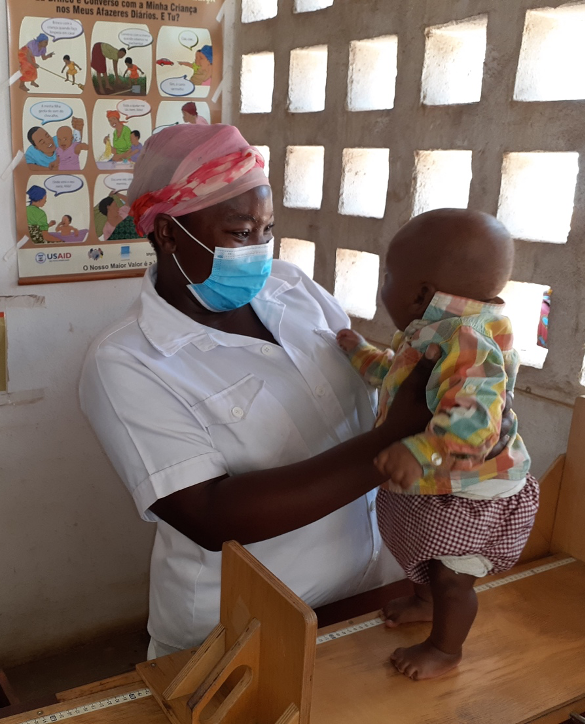
When initial implementation was observed, it became clear that health providers were not adequately integrating ECD services into their routines. Facility providers tended to offer standalone counseling on care for child development after completing clinical work, which unnecessarily prolonged consultation time, and many community health workers, enthusiastic after the training, were focusing their household visits on early childhood development to the exclusion of other health areas.
Confronted with this reality, the PATH team decided to take a step back to understand how routine clinical and community services are actually delivered in Mozambique and Kenya, and how ECD components can be integrated into these services. As a result, we have learned that: 1) preventive or promotive counseling during routine services is rare; counseling is usually done in response to an identified need; 2) different touchpoints offer different opportunities for counseling; 3) there is little warmth and empathy in communication between providers and clients; child-friendly interactions are not common; and 4) few counseling job aids are used routinely. Lack of preventive nutritional counseling was noted as a particular concern in the context of high rates of child malnutrition and importance of nutrition for healthy brain development.
As a result, PATH designed pictorial cards that encouraged warm communication with caregivers and children and offered age-appropriate guidance on responsive care, early learning, and nutrition, indicating relevant content for different touchpoints. The cards also suggested who to prioritize for counseling. Training was redesigned to strengthen the quality of counseling and to help integrate counseling into normal service routine.